
Halifax Examiner | by Marielle Godfrey | April 9, 2026
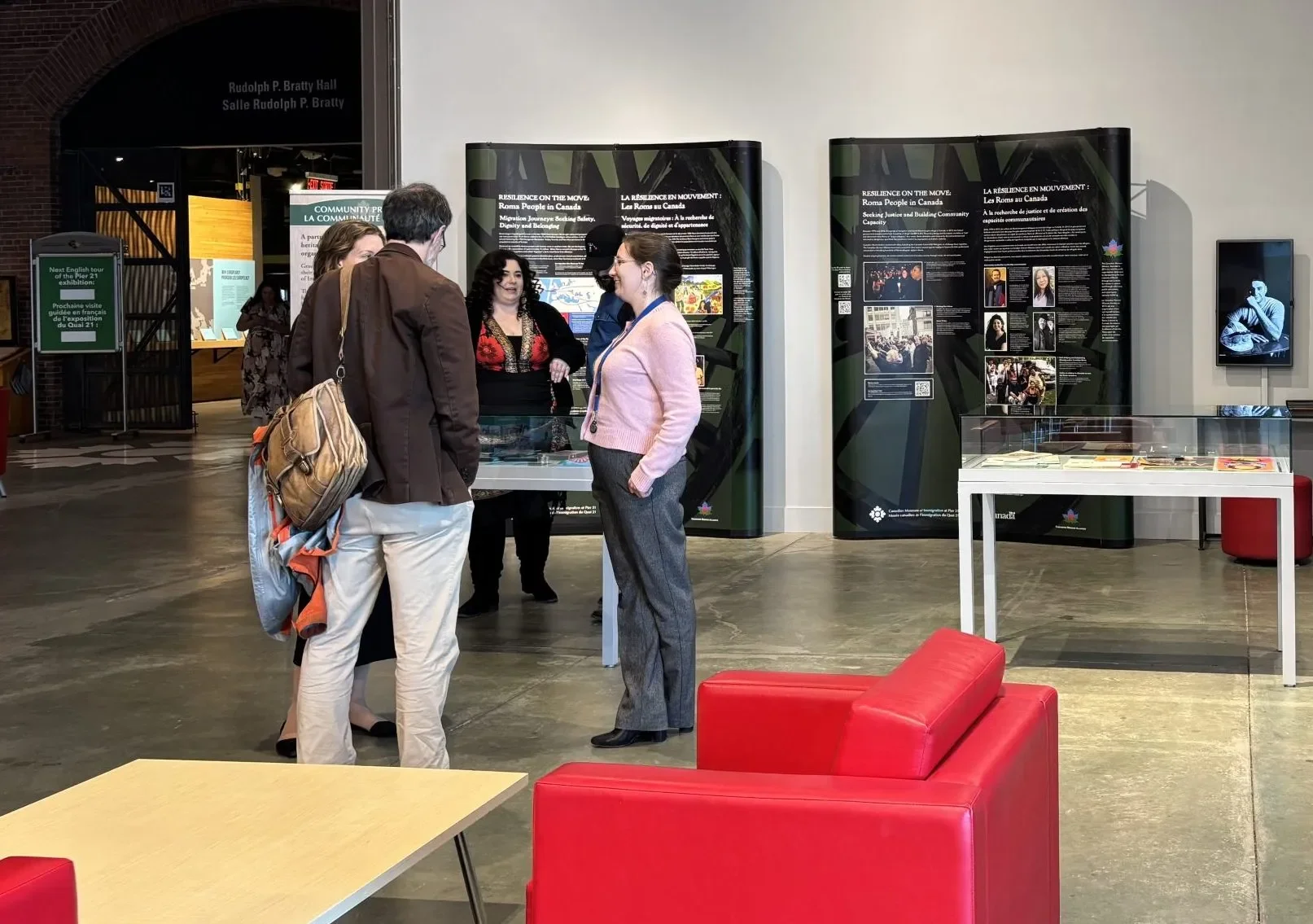
People at the opening of the Resilience on the Move: Roma People in Canada exhibit at Pier 21 on April 8, 2026. Credit: Marielle Godfrey
Around 30 people gathered at the Canadian Museum of Immigration at Pier 21 last night to mark International Romani Day and support a new exhibit highlighting the Roma community in Canada.
Resilience on the Move: Roma People in Canada is part of the Community Presents series and will run until June 24. It explores the ethnic group, often referred to as gypsies (many consider the term offensive) who came to Canada from many countries across Europe.
Gina Csanyi-Robah, co-founder of the Canadian Romani Alliance, was among the featured speakers at the event. Her family came to Canada after escaping the 1956 Hungarian Revolution.
Her maternal grandparents landed at Pier 21.
“It’s such a full circle moment,” Csanyi-Robah said speaking to the Examiner before the event. “Honestly, I can’t even tell you how it gives me chills in my body to be here.”
Csanyi-Robah was approached five years ago by the museum to collaborate with their Community Presents program. Along with Shayna Plaut, a board member of the Canadian Romani Alliance, she helped develop the first national exhibit focused on Roma people in Canada.
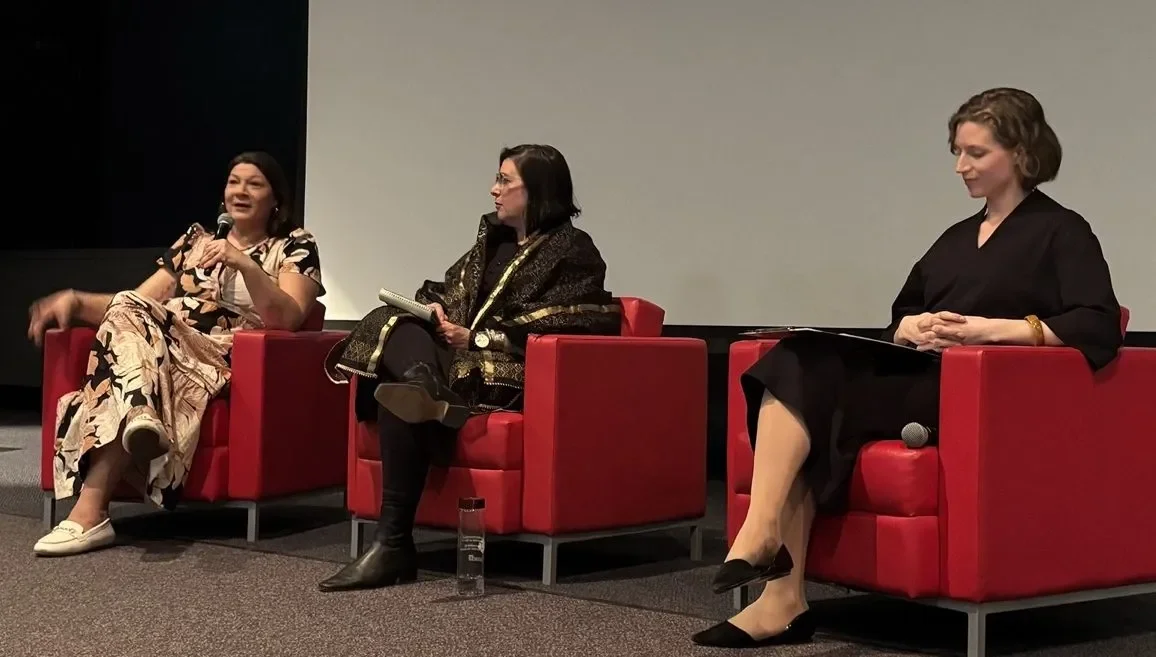
Gina Csanyi-Robah (left), Shayna Plaut, and Sara England discuss the exhibit they co-created, Resilience on the Move: Roma People in Canada, during an event at Pier 21 on April 8, 2026. Credit: Marielle Godfrey
The exhibit features a map tracing Roma migration over centuries, books, CDs, and photos of Roma people in Canada throughout the years.
During the discussion, Sara England, the museum’s curator of temporary and traveling exhibitions, described the exhibit as a “very frank look at the experiences Roma people have faced.”
‘Truth-telling and humanizing Roma people’
During the discussion, Csanyi-Robah recalled growing up and experiencing the negative gypsy stereotypes. People would make jokes about gypsies stealing or being fortune tellers, and she would feel unwelcome when going to Hungarian restaurants in her neighbourhood in Toronto.
“This exhibit is one way of truth-telling and humanizing Roma people and situating them here in Canada,” England said.
For Csanyi-Robah, the project has been rewarding professionally as well as personally.
“I would have to say in my 22 years of Romani rights, activism, community building, and being a leader in the Canadian Roma community, this is maybe my most special project that I’ve ever worked on,” Csanyi-Robah said.
A 2024 research study, co-authored by Csanyi-Robah and FXB Center for Health and Human Rights at Harvard University, estimates there are approximately 110,000 Romani people in Canada.
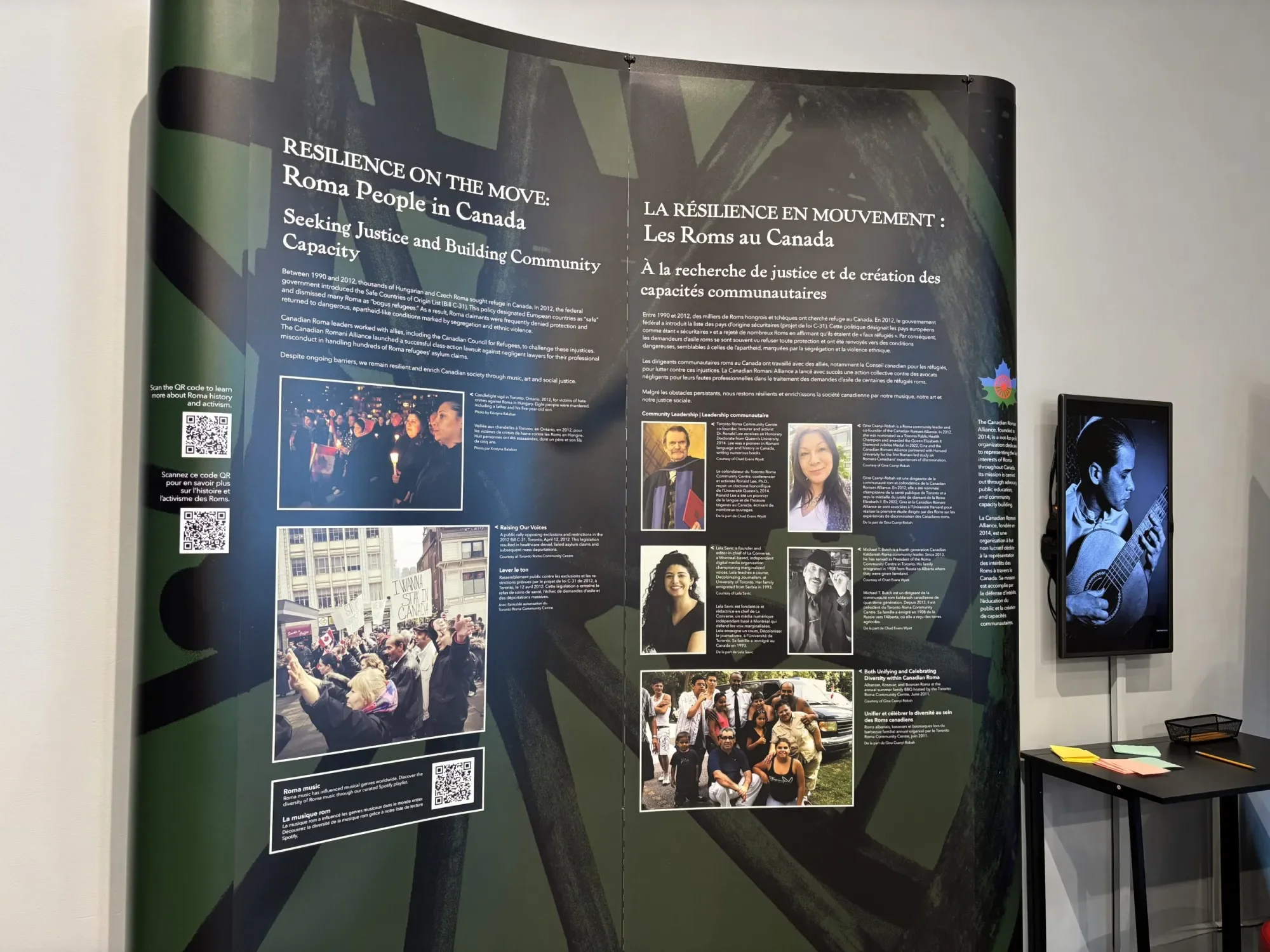
A part of the Pier 21 exhibit dedicated to highlighting the Roma community builders in Canada. Credit: Marielle Godfey
While Roma people are commonly known as gypsies, Csanyi-Robah said the word is inaccurate. One of the Canadian Romani Alliance’s missions is to challenge the negative stereotypes that come with the word.
Csanyi-Robah hopes visitors leave the exhibit with a more accurate understanding of the Roma people, especially after seeing a series of black and white portraits of Roma Canadians by photographers Chad Evans Wyatt and Mary Evelyn Porter.
“It really changes the face of what people think Roma or Gypsies are,” Csanyi-Robah said. “It gets rid of the nonsense stereotypes about fortune tellers, wandering, caravans, thieves, and all these other negative stereotypes we’re always fighting.”
The event opened with a virtual performance by the Gypsy Rebels, fronted by Roma musician Micheal T. Butch, who also sang the Romani national anthem “Gelem Gelem.”
‘It just shows the resilience of the people’
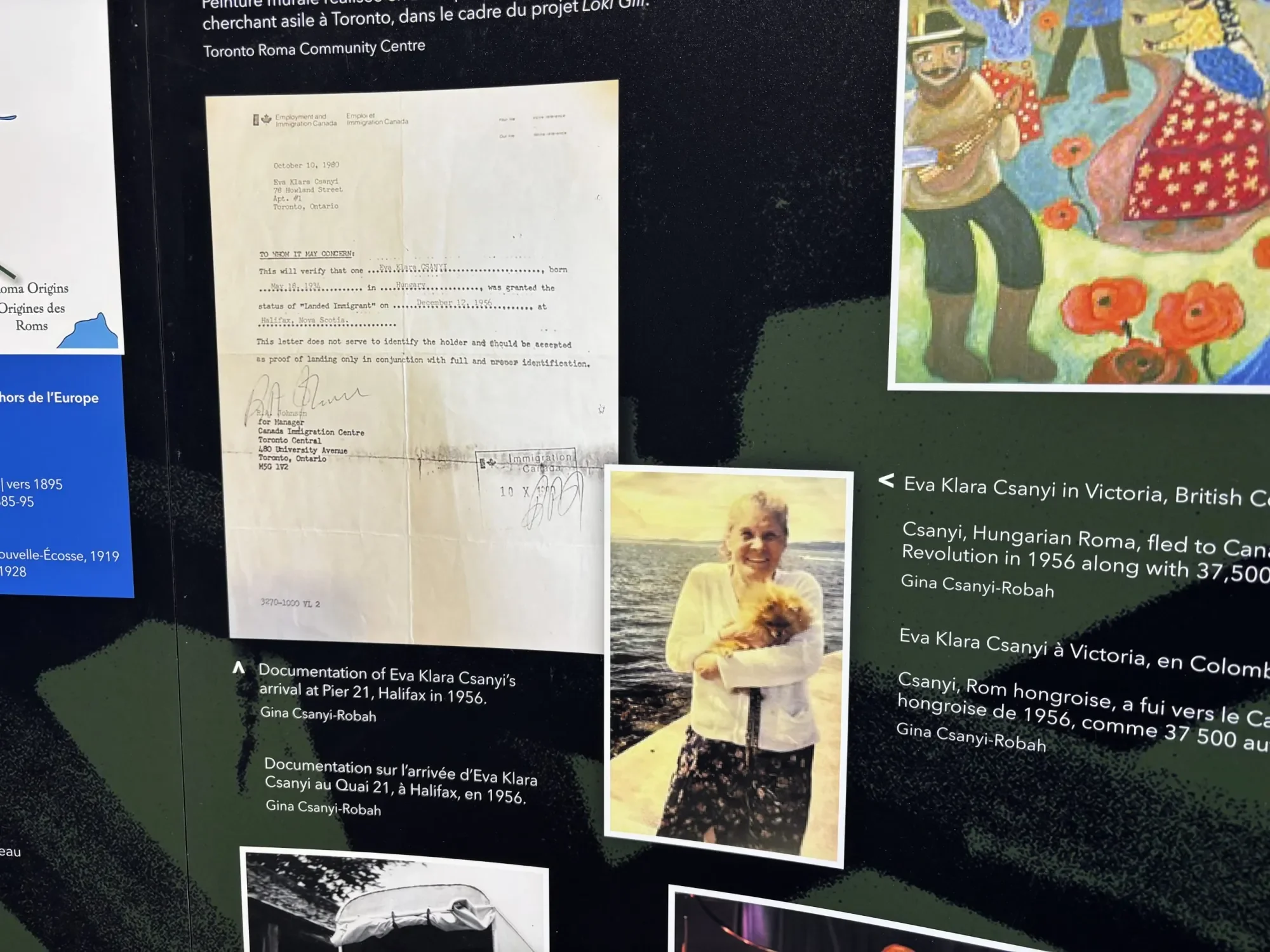
Gina Csanyi-Robah’s grandmother’s documentation of her arrival at Pier 21 is displayed as part of the exhibit. Credit: Marielle Godfrey
Among those in attendance was Faith Piccolo, who came to the event with her husband to learn more about Roma history and culture.
“We know very little about the Roma people. I don’t know any Roma and I just wondered what brought them here,” Piccolo said.
After listening to the discussion and walking around the exhibit, what stood out to Piccolo is the community’s resilience.
“After persecution in their own countries and the bad reputation they have been faced with, just the word gypsy alone, it just shows the resilience of the people,” Piccolo said.
During the discussion, Csanyi-Robah explained that Roma people came to Europe from Northwest India. The term gypsy came from Europeans mistaking them for Egyptians.
Roma, the accurate term to describe the group, means “the people” in Romani.
“We are not a subculture, we are actual ethnic people,” Csanyi-Robah said. “We know there’s a whole history that we’ve come with and it’s important for people to get to know that. It will help so many of us when Canadians start to learn a little bit more about our community.”